AAMI Newsletter — Gen Z Has Never Been More Afraid of Death (or More Engaged with It) (Issue No. 12)
Preparing compassionate professionals for the world’s most dignified, AI-proof career.

Welcome to this new issue of the AAMI Newsletter. We promise not to clutter your inbox — only updates once or twice a month on all things AAMI. In this edition:
By the Numbers: 3 Charts on Gen Z and Death
Fall Semester Starts in Aug (Apply Now)
The Big Story: Gen Z Has Never Been More Afraid of Death (or More Engaged with It)
Hot Topics (Quick headlines)


Chart 1: Planning Likelihood by Generation
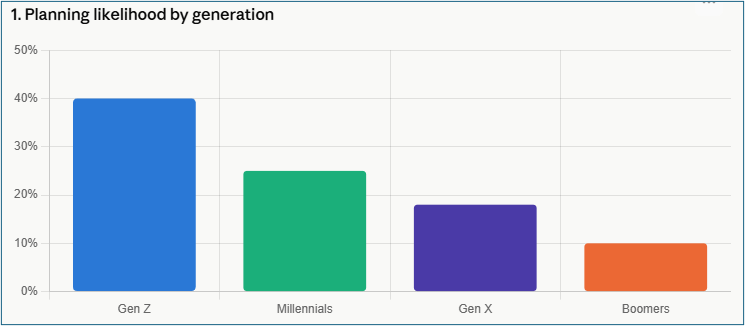
Gen Z is 4x more likely than Baby Boomers to plan ahead, showing a generational shift in attitudes toward mortality and preparation.
Chart 2: Concern That Private Messages Stay Private After Death
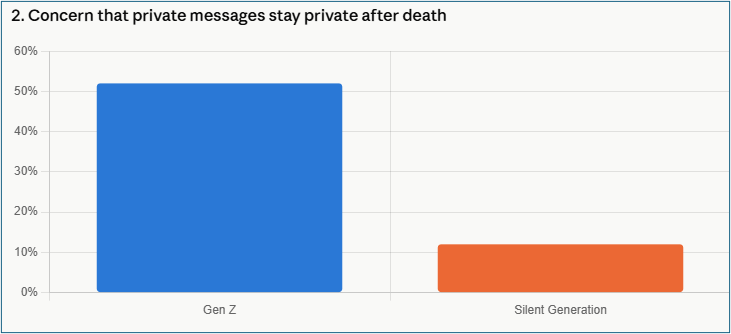
52% of Gen Z consider it important that private messages remain private after death, compared to only 12% of the Silent Generation (generation prior to Baby Boomers).
Chart 3: Gen Z Estate Planning Status
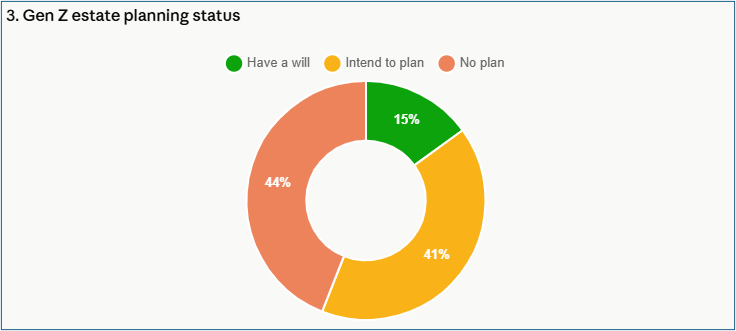
While only 15% of Gen Z have a will, 41% intend to plan, revealing a critical gap between awareness and action.
Sources provided at the end of the newsletter.

A degree geared for Job Security. Steady Income. Personal Integrity.
It takes one minute to apply. We saw our highest application numbers in years during our summer enrollment season. Why? Because our graduates enter an AI-proof career with a 90% employment rate.
Apply now and secure your seat for the fall semester.

Our President is hosting a live “ask us anything” webinar for every applicant on Tuesday August 11 @ 1pm EST.
He will review helpful information. This is also a casual and direct conversation about the curriculum, the profession, financial aid, your specific situation, or what makes AAMI different.
With the start of the Fall Semester starting August 31 – and Spring Semester applications due soon – this is the perfect time to get answers that will help you move forward with confidence.
Can’t attend live? Register anyway and we’ll send you the recording, but we’d love to have you there in real time.
See you Aug 11!
The Big Story

Gen Z Has Never Been More Afraid of Death (or More Engaged with It)
A generation that came of age during a pandemic, grew up watching death unfold on their social feeds, and spends hours watching morticians on TikTok is doing something counterintuitive: they’re planning their funerals. According to a 2025 estate planning study, Gen Z (18-34) has higher end-of-life planning participation than adults 35-54, the first time this has ever been true. Yet the National Funeral Directors Association data also shows Gen Z reports the highest levels of death anxiety of any generation.
So, what’s really happening? Rather than avoiding death, Gen Z seems to be confronting it head-on; and in the process, they’re reshaping what a funeral can be. They’re also doing it out in the open, on a platform with more than 28,000 posts tagged #deathtok.
The Paradox: Fear and Engagement
The numbers seem contradictory at first. While 33% of Baby Boomers are very comfortable thinking about their own death, only 24% of Gen Z feel that way. But here’s where it gets interesting: Nearly seven in 10 Gen Z respondents told NFDA researchers that holding a funeral or memorial for a loved one is important, a higher share than Baby Boomers and Gen X, and slightly more than Millennials.
In other words: Gen Z is anxious about death, but they’re not running from it. Why? Having grown up in the age of cell phones and digital distraction, the appeal of community and community practices such as formal funerals may hold strong sway. Death, in Gen Z’s world, isn’t a taboo topic relegated to whispered conversations. It’s ubiquitous. So instead of avoiding it, they’ve made space for it online, and they want it to matter.
DeathTok is Real (and it’s actually changing things)
You’ve probably seen them if you’ve scrolled TikTok lately: morticians with 300K+ followers, funeral directors breaking myths, crematorium operators answering the questions no one used to ask out loud. The hashtag #DeathTok has accumulated tens of thousands of posts, and individual creators like Lauren the Mortician and Jasmine the Mortician have built audiences of hundreds of thousands of followers. The #mortician tag alone has racked up 70 million views.
This isn’t fringe content. Founded by mortician Caitlin Doughty in 2011 through The Order of the Good Death, the movement encourages open conversations about death, advocates for funeral industry transparency, and rejects the cultural taboo around mortality. The migration of this content to TikTok represents a generational shift in both medium and tone, where Doughty’s early work was educational and literary, DeathTok is rapid-fire, irreverent, and conversational.
And it’s having real impact. Caring.com’s 2025 Wills and Estate Planning Study noted that TikTok partnerships promoting estate planning websites in 2024 may explain why the 18–34 cohort showed higher estate planning participation than the 35–54 cohort for the first time. Gen Z is literally learning about end-of-life planning from TikTok funeral professionals.
(As a cultural marker: this conversation is important enough that SXSW programmed a panel on death positivity. Death care professionals have a seat at the cultural table now.)
Back to Burial, Back to Ritual
The shift in disposition preferences is equally striking. While Millennials increasingly prefer cremation (58% vs. 42% of Gen Z), Gen Z shows a notably greater preference for traditional burial, reversing decades of trends. But this isn’t nostalgia. Many Gen Z respondents are drawn to casket burial because they want physical spaces where the living can visit, suggesting an emphasis on connection and continuing bonds rather than convention.
Gen Z wants ritual. They want community. They want a funeral to mean something. And crucially: Younger generations view funeral directors as valuable experts and trusted professionals, with Gen Z expressing the strongest belief in their importance.
Think about that for a second. At a time when young people are questioning every institution and profession, they’re placing more trust in funeral directors than any other generation. They see funeral directors as essential. As necessary. As people who understand something important.
The Curation Never Stops: Planning the Digital Afterlife
Here’s another layer to Gen Z’s death consciousness: they’re not just worried about how they’ll be remembered, they’re worried about being remembered wrong. For a generation that has curated their entire online identity, the thought of their digital footprint existing after they die (without their control) feels deeply uncomfortable. Gen Z is planning for the digital afterlife, creating “death folders” and legacy instructions for social media accounts. Some users are even training AI versions of themselves using their texts, voice notes, and photos to live on after they’re gone.
For a generation obsessed with identity, aesthetic, and digital storytelling, death feels messy. You curate your entire online vibe for years. Then poof—you’re gone, and someone else might post a grainy pic of you in middle school as your final image. This is why some are taking matters into their own hands: deciding which accounts to memorialize, which to delete, and who gets access to their digital legacy.
This speaks to something deeper about Gen Z’s relationship with death: they want agency. They want a digital legacy that reflects their core values. They want a say in how that story ends.
What This Means for You (Yes, You — especially, if you’re thinking about this field)
If you’re reading this newsletter and considering whether a career in funeral service is worth it, here’s what the data is actually telling you. Moreover, if you are a practicing funeral service professional and evaluating more Gen Z candidates to join your practice, read on:
The funeral industry isn’t dying (sorry for the pun). It’s evolving. Gen Z is coming with different expectations. They want transparency, they want environmental options, and they want ritual that feels authentic rather than rote. Gen Z is going to push the profession to modernize. They already are.
They’re going to ask harder questions. And they’re going to value funeral directors who meet them there.
When young people mourn, they’re not just attending funerals anymore. When an 18-year-old from Oregon passed away in 2024, his friends logged onto Minecraft and built a floating garden, leaving signs with messages like “Thank you for existing.” Similar trends are emerging across Roblox memorials, VRChat ceremonies, and Fortnite tribute games. This isn’t replacing traditional funeral service. It’s expanding what ritual can look like.
The funeral professionals who understand this shift, who can hold space for both a casket and a digital shrine, who can explain green burial options as passionately as traditional ones, who can talk openly about death on TikTok and then sit quietly with a grieving family in a funeral home, those professionals are going to shape the industry for the next 40 years.
And right now, that’s a field that needs you.
Sources provided at the end of the newsletter.

✍️ AAMI Blog: What Funeral Service Education Teaches About Running a Funeral Home - Read Now
💻 NFDA: Updated list of state associations - Learn More
🏅AAMI Swag: Check out 100th anniversary merch – Shop Now
📅TED Talk revisited: A burial practice that nourishes the planet - Watch Now
Sources
Charts
VICE (2021). “Gen Z Has a More Mature Attitude Towards Death Than Boomers, Study Finds.”
Trust & Will (2025). “2025 Estate Planning Report: Expanding the Definition of Legacy.”
Trust & Will (2025). “2025 Estate Planning Report: Demographic Breakdown.”
Empower (2024). “Coining a Legacy: How Americans Plan to Leave Their Mark.”
The Big Story
TalkDeath (2022). “Death Be Not Proud: Gen Z’s Attitudes Surrounding Death and Dying.” — Over 80% of Gen Z engage death through humor; 80%+ regularly consume media with death themes.
Caring.com (2021). “2021 Wills and Estate Planning Study.” — Young adults (18–34) with wills increased 63% since 2020; young adults now more likely to have a will than middle-aged adults (35–54).
Hickman C, et al. (2021). “Climate anxiety in children and young people and their beliefs about government responses to climate change: a global survey.” The Lancet Planetary Health, 5(12):e863-e873. — 75% of young people say “the future is frightening”; 56% say “humanity is doomed.”
Jacobsen MH, Petersen A (2020). “The Return of Death in Times of Uncertainty—A Sketchy Diagnosis of Death in the Contemporary ‘Corona Crisis.’” — COVID-19’s psychological impact during Gen Z’s formative years.
Kasket E (2023). “He’s Still There: How Facebook Facilitates Continuing Bonds With the Deceased.” OMEGA – Journal of Death and Dying. — Social media as space for memory and connection with deceased.